10:00 AM – 11:00 AM Courses
-
Lectures on Diverse Topics
WWLL is fortunate to have access to distinguished people who volunteer their time and expertise to give lectures on an eclectic array of topics.
Course Organizers: This course was organized by Ann Dolbear, Steve Engler, Barbara Mason, and Bruce Belason. The Zoom host is Bill Cohen.
Below is a summary of dates, lecture titles, and speakers. For the entire lecture description and speaker bio, click on the “+” symbol to the right of the course title. To hide the information accessed, click again on either the lecture title or the “+” sign to the right of the title.
-
September 14
Over the course of the nineteenth century, what we know as “The American West” came into being. In this talk, Pulitzer Prize finalist Megan Kate Nelson will explain how diverse communities grew and flourished in the region while, at the same time, they were erased from a frontier myth that lionized individualism and celebrated white settlers traveling west in search of prosperity.
Drawing on material from her new book, The Westerners (published by Scribner in 2026), Dr. Nelson will describe the individual and federal actions that created these cultural tensions during the nineteenth century. She will introduce three of the protagonists in her book, whose popular memories were manipulated in the years after their deaths: Sacajawea, not just Lewis and Clark’s guide but an explorer who forged her own path; Jim Beckwourth, a biracial fur trader whose sharp cultural insights made him famous in his time; and the defiant Ella Watson, a Canadian immigrant with dreams of becoming a cattle rancher in Wyoming.
Speaker: Born and raised in Colorado, Megan Kate Nelson is a historian and writer based in Boston, with a BA from Harvard and a PhD in American Studies from the University of Iowa. She is the author of five books, including The Westerners: Mythmaking and Belonging on the American Frontier (Scribner, 2026); Saving Yellowstone: Exploration and Preservation in Reconstruction America (Scribner, 2022; winner of the 2023 Spur Award for Historical Non- Fiction); and The Three-Cornered War: The Union, the Confederacy, and Native Peoples in the Fight for the West (Scribner, 2020; 2021 Pulitzer Prize finalist in History).
Dr. Nelson also writes about the Civil War, the U.S. West, and American culture for The New York Times, Washington Post, The Atlantic, Smithsonian Magazine, Slate, and Time.
-
September 28
This presentation discusses the joy, personalization, and the health benefits of music. Musical taste forms over a lifetime of positive and negative listening experiences to create a unique profile for each music lover.
Your favorite music reveals your sense of self and offers a reference point for sharing aspects of yourself with others. Dr. Rogers will discuss how music preferences form and the notion of a personalized “listener profile.” No matter which style is your favorite, listening and participating in musical activities is what neuroscientists call a “whole-brain workout.” Musical activities help promote successful aging by easing some of the negative aspects of growing older.
The speaker will look at how music is harnessed to improve motor coordination, how singing boosts the immune system, and how listening to music enhances the quality of life.
She concludes with some insight into age-related hearing loss and the importance of hearing aids for social and mental well-being.
Speaker: Susan Rogers holds a doctoral degree in experimental psychology from McGill University (2010). Prior to her science career, Susan was a multi-platinum-earning record producer and audio engineer.
She is best known for her work with Prince (1983-1987), but her production/engineering credits also include David Byrne, Barenaked Ladies, Rusted Root, and many others.
She teaches neuroscience and psychoacoustics for Berklee Online.
Her book on music listening is titled This is What It Sounds Like: What the Music You Love Says About You published by W. W. Norton in 2022. She is currently writing Music Cognition: From Anatomy to Ecstasy for Princeton University Press.
-
October 5
NOTE DIFFERENT TIME FOR THIS PRESENTATION: 9:45-10:45 am
Thomas Jefferson was a deeply paradoxical figure—both a founding champion of liberty and a lifelong slaveholder—whose legacy must be understood in its full complexity. While he enslaved more than 600 enslaved people and participated in a system he publicly condemned, Jefferson consistently articulated and promoted ideals of natural rights, equality, and freedom that reshaped the United States and influenced democratic movements worldwide.
He made repeated (though often unsuccessful) efforts to curb or end slavery through legislation, legal cases, and policy, including opposing the slave trade, limiting slavery’s expansion into western territories, and helping abolish the transatlantic slave trade.
At the same time, his personal actions—grounded in racial prejudice and economic dependence on slavery—fell far short of his ideals. Jefferson should neither be dismissed solely for his moral failures nor celebrated uncritically but rather understood as a flawed yet pivotal figure whose ideas about human liberty transformed global history even as he struggled to reconcile them in his own life.
Below is an article that the class participants are invited to read that was published in the Lewis and Clark Trail Association journal: We Proceeded On.
Jay H. Buckley grew up on ranches in Bridger Valley, Wyoming, and in the Uinta Mountains.
He received an MA in history from BYU before earning his PhD at the University of Nebraska.
Buckley is an Associate Professor of History at Brigham Young University, where he teaches courses in U.S., American West, and American Indian history and coordinates the American Indian Studies minor. He is the director of BYU’s Charles Redd Center for Western Studies.
Buckley served as president of the national Lewis and Clark Trail Heritage Foundation (2011–2012), which provides leadership in scholarship, education, and conservation pertaining to the Lewis and Clark National Historic Trail.
Buckley is the author of the award-winning William Clark: Indian Diplomat and co-author of eleven other books, including By His Own Hand?: The Mysterious Death of Meriwether Lewis, Zebulon Pike, Thomas Jefferson, and the Opening of the American West, and Great Plains Forts.
-
October 19
Drawing on his knowledge of politics and American history, Larry DiCara will discuss the State of the Union. There will be quotes from authors and commentators, about where the nation is heading and commentary regarding the upcoming important House and Senate elections.
After the presentation there will be time for a robust conversation
Speaker: Larry DiCara is a former president of the Boston City Council and has been an attorney for more than 50 years focusing on real estate development. He is the author of Turmoil and Transition in Boston: A Memoir of the Busing Era and the recent novel: Frothingham: A Novella About Boston, dealing with lawyers, politicians, and families in Boston in the 20th Century.
Larry is a graduate of Boston Latin School, Harvard College, Suffolk University Law School, and the John F. Kennedy School of Government.
He is the father of three grown children and splits his time between Boston, Marion, and Ft. Myers, Florida.
-
October 26
Join us for a talk by Dr. Richard Bell, author of Stolen: Five Free Boys Kidnapped into Slavery and Their Astonishing Odyssey Home that tells the incredible story of five boys whose courage forever changed the fight against slavery in America.
Philadelphia, 1825: Five young, free Black boys fall into the clutches of the most fearsome gang of kidnappers and slave traders in the United States. Lured aboard a small ship with the promise of food and pay, they are instead met with blindfolds, ropes, and knives. Over the next four long months, their captors force them overland into the Cotton Kingdom to be sold as slaves. Determined to resist, the boys form a close brotherhood as they struggle to free themselves and find their way home.
Their ordeal—an odyssey that takes them from the Philadelphia waterfront to the marshes of Mississippi and then onward still—shines a glaring spotlight on the Reverse Underground Railroad, a black-market network of human traffickers and slave traders who stole away thousands of legally free African Americans from their families in order to fuel slavery's rapid expansion in the decades before the Civil War.
Speaker: Richard Bell is Professor of History at the University of Maryland. He is the author of the book Stolen: Five Free Boys Kidnapped into Slavery and Their Astonishing Odyssey Home, which was a finalist for the George Washington Prize and the Harriet Tubman Prize.
He has held major research fellowships at Yale, Cambridge, and the Library of Congress and is the recipient of the National Endowment for the Humanities Public Scholar Award and the Andrew Carnegie Fellowship.
His new book, The American Revolution and the Fate of the World, published by Penguin, recently won the Journal of the American Revolution Book of the Year Award.
He maintains a list of upcoming events at Richard-Bell.com.
-
November 2
Jim O’Connell’s talk on Becoming Cape Cod: Creating a Seaside Resort is based on his book about the history of Cape Cod’s development as a vacation mecca.
The presentation, illustrated with his collection of rare historic postcards, traces Cape Cod’s resort history from its discovery by Henry David Thoreau before the Civil War to the present day.
The talk covers three eras: 1870—1920, the early years of the resort; 1920—1950, the impact of the automobile on creating a tourist region with common marketing, a plethora of attractions, and a strong heritage appeal; and 1950—present, measures taken to preserve the Cape in the face of overdevelopment.
The book Becoming Cape Cod served as the basis for a two-year exhibit on Cape Cod's history as a resort at Sandwich's Heritage Museums & Gardens in 2022—2023.
Speaker: Jim O’Connell has a B.A. from Bates College and an M.A. and Ph.D. in Urban History from the University of Chicago.
He teaches in the City Planning-Urban Affairs Program at Boston University.
Jim has worked in planning positions at the National Park Service, the Cape Cod Commission, and the City of Springfield, Massachusetts.
Besides his Cape Cod book, he has written Boston and the Making of a Global City, Dining Out in Boston: A Culinary History, and The Hub's Metropolis: Boston's Suburban Development, From Railroad Suburbs to Smart Growth.
He formerly lived on the Cape, in Yarmouth Port, and currently lives in Newton with his wife, Ann Marie.
-
November 9
Eyewitness to Revolution, published in 2025, includes 80 items from the Concord Museum collection associated with the American Revolution, particularly the event at the North Bridge on April 19, 1775, including paintings, documents, firearms, swords, powder horns, and ceramics.
Speaker: David Wood has been curator of the Concord Museum since 1985 and has reinstalled and reinterpreted the entire museum twice and planned and implemented more than 100 temporary exhibitions.
He has published numerous articles on Concord's craft community and two books, An Observant Eye: The Thoreau Collection at the Concord Museum (2006) and Eyewitness to Revolution: The Revolutionary War Collection at the Concord Museum (2025).
-
November 16
You know it as the “T.”
But do you know how Boston came to build the nation’s first underground trolley system, the challenges that were overcome, the tragedies that interrupted its construction, and the powerful men who made sure Boston built a subway before its more famous neighbor to the south, New York City?
This is the story of The Race Underground: Boston, New York, and the Incredible Rivalry That Built America’s First Subway.
Speaker: Doug Most, a Needham resident, is the author of Launching Liberty: The Epic Race to Build the Ships That Took America to War (Simon & Schuster, 2025). A lifelong journalist and author, his career has spanned newspapers, magazines, and universities, from Washington, DC, to South Carolina, New Jersey, and Boston.
He worked for 15 years at The Boston Globe as the Sunday Magazine editor and deputy managing editor for special projects.
His 2014 nonfiction book, The Race Underground, tells the story of the birth of subways in America in the late 1800s and was adapted into a PBS/American Experience documentary. The New York Times called the book “a sweeping narrative of late-19th-century intrigue.”
After eight years at Boston University, he is now the Executive Director of Content & Editorial Strategy in the Office of Harvard Public Affairs and Communications.
-
November 23
In this fourth installment of our series, Robin Johnson returns to look beyond the immediate headlines and map out the true reality of our changing digital landscape. Artificial Intelligence is rapidly shifting away from a tech novelty and is becoming a fundamental part of the tools, websites, and devices we use every single day. Instead of acting like old computer programs that need rigid, step-by-step instructions, today's technology is evolving into software that can simply "figure it out" on its own.
In this warm, conversational, and completely non-technical presentation, we will cover:
- Real-World Impacts: We will demystify the broader effects of this technology, including how it is reshaping industries and the workforce, as well as provide a peek behind the curtain at hidden environmental costs, such as the massive amounts of power and water these systems consume.
- Stories from the Front Lines: Robin will share the latest real-world advancements, showing how people are now using simple, everyday language to design visual projects or even build custom family games without needing to know a single line of computer code.
- An Open Q&A Session: We will dedicate time to answering your specific questions so you can learn exactly what you need to stay current, protect your digital privacy, and confidently evaluate how to use these tools in the way that is best and most appropriate for you.
Speaker: Robin R. Johnson is a friendly AI expert and innovator who focuses on making technology approachable, safe, and genuinely useful for everyday people.
Over the last few decades, Robin has worked with some of the world's most recognizable creative and entertainment companies, including Meta, Disney, Electronic Arts, and DreamWorks, building tools that help people tell their stories.
He currently leads AI innovation at Mixbook, the world's top-rated photobook platform, where he designs smart, simple tools to help families preserve and celebrate their most precious memories.
A resident of Wellesley and a father of two, Robin is dedicated to helping his neighbors navigate the changing digital landscape with confidence, safety, and a healthy sense of perspective.
-
November 30
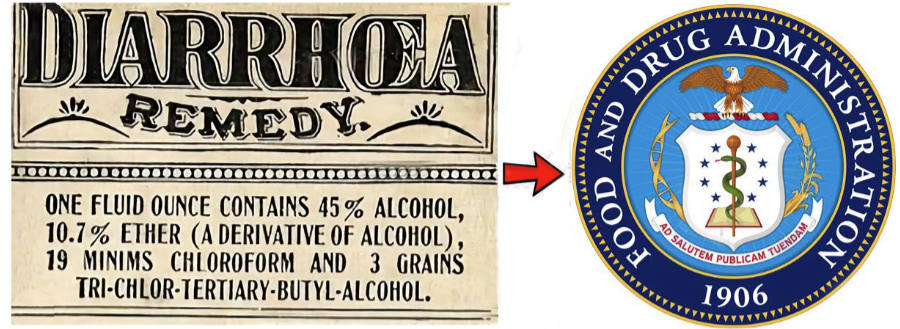
During the 19th century, traditional medicine transformed from practices based on time-honored approaches, many of which may have done harm, to one moving toward the use of science. Drugs that were used were dispensed by physicians, but there was little standardization or testing. Along with this, however, came a growth in alternative approaches, including the widespread marketing of "cures" that could be purchased without the need for a physician and for which there was no limitation regarding the cures that were promised or the safety of the product.
Drugs dispensed under both circumstances could do harm and might do no good. As public awareness grew, the calls for regulation grew as well. The involvement of the federal government was incremental, with regulations covering demonstrated harms. We will cover the calls for regulation and the responses of the government from the 19th through the late 20th centuries.
Speaker: B. Dale Magee, MD, is a retired obstetrician-gynecologist with a career-long interest in the history of medicine, as well as health policy and public health. In 2024, he founded the New England History of Medicine Society. They provide presentations as well as tours for those interested in the history of medicine. All are welcome to join.
In addition to a medical degree from the State University of New York Upstate Medical Center, he trained in Obstetrics & Gynecology at Case Western Reserve University in Cleveland and later earned a master's degree in health policy & quality measurement at the Dartmouth Institute.
He has served as president of the Massachusetts Medical Society, Commissioner of Public Health for Worcester, and on various public health committees dealing with maternal, infant, and child mortality.
In addition, he served for four terms on the Shrewsbury School Committee.
-
-
Poetry for the People
9 weeks. September 28 - November 30. Fear and courage are often seen as opposites, yet courage exists because fear does. In this class, we will explore poems that reflect fear, courage, uncertainty, and loss, along with acts of bravery. Through the work of contemporary and classic poets, we will discuss how poetry gives voice to our fears and reveals the courage to face them. As with other Poetry for the People classes, class members are encouraged to express their views and insights to these poems, which enrich the class for all present.
Teacher: Charles Kamar has a bachelor's degree from Boston State College and a master's degree from Boston University. He has taught at all secondary grade levels and spent 20 years at Newton North High School. In 1998, he won the Paul E. Elicker Award for Excellence in Teaching.
-
Wollen Sie Deutsch Sprechen?
An hour of conversation for students of German and German speakers. A basic knowledge of the German language is necessary. The group is peer-led, with members suggesting stories, articles, poems, and multimedia for discussion (auf Deutsch). Participants also write a few sentences on group-selected topics, helping us become more acquainted with each other as well as the Deutsche Sprache. Talents represented in the group make for a lively class.
Teacher: Peer-Led class.
11:30 AM – 12:30 PM Courses
-
Bright Moments of Jazz & Rock
This course celebrates the great bands and stars of pop, rock, soul, and jazz. We will listen to recordings, watch videos, and talk about a wide variety of musicians and bands. Social, historical, and musical context will be provided. Examples of the artists who will be included are Aretha Franklin, Doobie Brothers, Vulfpeck, Beatles, California Honeydrops, Temptations, Stan Getz, Miles Davis, Weather Report, Jon Cleary and some Doo-wop thrown in too. You will likely discover artists you like that are new to you along the way. We will listen, watch, and discuss the greats. We will take a look at what it takes for new bands to be successful in the Internet era. You will expand your jazz and rock music appreciation and have fun doing it. Come and share your bright moments!
Teacher: Tom Doran is a retired bassist/vocalist who played Soul, Funk, Blues, Jazz, and Rock. In retirement he loves to make abstract art abstract art. He loves to talk about music, so if you do too, please join!
-
CREATIVE UNIVERSE: The Scientific History of Everything for the Non-Scientist
The remarkable story of how the Universe created itself, as told by science, follows a long path that evolved from the chaos of the beginning of time billions of years ago –the Big Bang– to the present day, which includes the complex interactions of a creature we call Human. In this 10-week course, we will build together this long and complicated sequence of events as it progresses from pure energy to elementary matter to form the origins of our planet and the evolution of life and human culture.
We will also explore the ways that this story of science helps –and doesn’t help– provide insight into fundamental questions of human existence.
Join us as we explore the depths and fringes of science in a way that a non-scientist can understand and that will also be thought-provoking and awe-inspiring.
Teacher: For a detailed description of the course, please see the attached document, Creative Universe: A History of Time from Chaos to Consciousness, written by Mr. Villa.
Frank Villa has a lifelong interest in the natural sciences. An award-winning lecturer, he is a natural teacher who finds great joy in explaining complex principles and processes and bringing the latest quests and discoveries of science to a general audience. He developed curricula and taught courses in many settings on topics as diverse as the formation of the Universe, human genetics, and how to make moonshine.
In addition to his degrees in the sciences, to explore his interest in the “big questions” Frank earned a master's degree in Religion and Theology from Andover Newton Theological School in 2004. He led the Science and Religion Program at the Boston Theological Institute for many years.
Frank is a former teacher of high school physics and earth science, a fully rated commercial pilot and flight instructor, and was a small business owner whose company specialized in the design and outfitting of science laboratories.
-
FOOD: THE SECRET SAUCE OF HISTORY: PART I
For thousands of years, we humans have amazingly solved our problems and lived our dreams. We’ve harnessed fire, invented iron and steel, created motor cars and computers and telephones. We’ve gone to the moon, conquered bacteria and even fought cancer to a standstill. But there remains one urgent matter nobody has ever solved, and it’s the oldest problem in the world: What are we going to have for dinner?
Our inescapable need to eat is the source of all human history. Long before Hitler needed “Lebensraum” and starved Europe to feed Germany, we created banana republics. Even before that, the Romans and Greeks created empires because they needed other lands to feed all their people. The Dutch sold Manna Hatta island to the British so they could get into the sugar business, and the French gave Canada to the British for the same reason. The great British Empire actually began with the East India Company’s obsession to monopolize India’s black pepper and cinnamon, then all the tea in China. And perhaps none of us would be here today on this continent if southern European Catholics hadn’t needed to eat so much fish.
Those ho-hum items in your pantry—salt, pasta, nutmeg—actually changed the world, and food keeps doing that because it has always been more than just nutrition. As the source of survival, it’s been the call to action and thus the root of all history. So, ingredient by ingredient, we’re going to get a taste of that.
Here is a list of books germane in various ways to the presentations of this course. Books about Food.
Teacher: Sandy Garson, an Ivy League international relations graduate, has been a journalist, tour guide, caterer and food historian who has cooked things up all over the planet (e.g., Mongolia, Nepal, Spain, France, England, Sardinia). She’s written two cookbooks, one with food history anecdotes included that won a prize. For the last six years, she’s been sharing all her food knowledge gathering with enthusiastic senior college participants and also gives popular, shorter talks at senior living centers as part of a group called The Savvy Palates. She lives in Maine.
-
Notable Supreme Court Cases of 2026
8 weeks: no class October 26 & November 30 This year, the U.S. Supreme Court addressed tariffs, birthright citizenship, presidential authority, voting rights, free speech, digital searches, and gun rights. Did the justices honestly try to determine what the Constitution, precedent and facts require? Or do their decisions just reflect the majority’s policy preferences or partisan behavior? As one justice says, to answer these questions, we must “read the decision.” For eight of the court’s 2026 decisions, we will do that by reading summaries of the court’s own language and viewing PowerPoint presentations. Did the court’s majority stay within its judicial lane in each case? Did it jump existing guardrails or put its thumb on the scales? Did it respect the Civil War Amendments’ guarantees, including the abolition of the incidents of slavery? The instructor will draw on his experience as a recently retired trial court judge and, previously, a lawyer who briefed and argued cases in state and federal appellate courts, including one U.S. Supreme Court oral argument.
Teacher: Doug Wilkins recently retired as a judge of the Massachusetts Superior Court, where he served from 2010 to 2023. In retirement, he has taught classes on the Supreme Court decisions of 2023, 2024, and 2025. From 1983 to 1999, he held various positions in the Massachusetts Attorney General's Office, where he argued more than 80 appeals at all levels of the state and federal courts, including numerous briefs and one argument in the U.S. Supreme Court. After receiving his J.D. in 1978, Wilkins clerked in the United States District Court for the District of Massachusetts, was an associate in the Boston law firm of Palmer & Dodge and, in the 2000s, became a partner at the Cambridge law firm of Anderson & Kreiger LLP.
-
Stories of Conflict as Seen Through a Narrators' Lens, Part XX
We will discuss how narrators’ perspectives affect our appreciation of works including selected sonnets by Shakespeare. Our emphasis will be on Hedda Gabler by Henrik Ibsen and Middlemarch by George Eliot.
Teacher: Helen Smith has taught at the Winsor School, Newton North, and in Armenia, Hungary, Kyrgyzstan, the Republic of Georgia, Romania, and Zambia. A Smith College graduate, she edits texts about writing and journalism. She is the president of the New England Scholastic Press Association.
-
Ten Uplifting, Slightly Eccentric, Little-Known Movies
Join us for a welcome escape from today’s turbulent world as we explore ten international films that earned critical acclaim yet remained largely under the radar. The selections include Grímur Hákonarson’s Rams, the story of two estranged brothers—sheepherders in Iceland—who are brought back together when tragedy strikes their flocks, and John Roberts’ War of the Buttons, which recounts the rivalry between two gangs of Irish schoolboys in County Cork. Links for streaming the films will be provided.
Teacher: David Moore received his master’s degree in American Studies from Boston College in 1966. He taught in the History Department at Newton North High School, receiving the Charles Dana Meserve Outstanding Teacher Award in 1993. His particular historical interests include classical Greece, American Studies, fin de siècle Europe, and the Holocaust.
-
Writing Your Story: (Memoir, NOT autobiography)
Maximum Enrollment: 14 If you enjoy writing and sharing stories of your life with a community of writers who will give you constructive feedback, this class may be for you. During each class, participants take turns reading their stories aloud while the class listens and writes thoughtful responses that are shared with the writer. This class will not only inspire you to write, but also will offer an opportunity to hear the intimate stories of others. Everything shared is confidential. The class regularly extends to 1 pm.
Teacher: Sue Crossley is a retired executive director with more than 40 years of experience in the nonprofit sector. During this time, she founded a nonprofit in PA supporting people with disabilities and led Family Promise Metrowest in Natick, serving families facing homelessness. Sue retired in 2022. During her tenure, she was inspired by the incredible resilience of the families served and wrote extensively to share their personal stories with others as a means of education and outreach to the community. Having come from an Armenian family of storytellers, she now enjoys writing her own personal stories in reflection of a life of gratitude.